
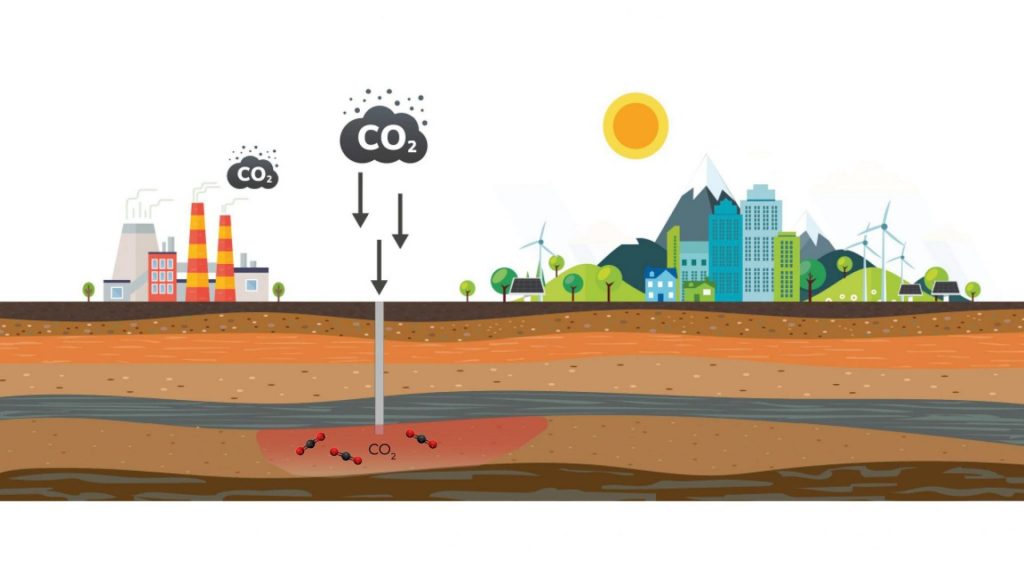
Overview of Subsurface Modeling for Energy Storage Projects
Definition of Subsurface Modeling in Carbon Dioxide (CO₂) and Hydrogen Storage
Subsurface modeling for Carbon Dioxide (CO₂) and hydrogen storage refers to the construction of high-fidelity numerical and conceptual representations of geological formations to predict fluid behavior, storage capacity, containment integrity, and long-term performance. These models integrate geological, geophysical, petrophysical, and engineering data to simulate multiphase flow, geochemical reactions, and geomechanical responses. The increasing importance of such models stems from their central role in ensuring safe and scalable energy transition pathways, particularly in carbon capture and storage (CCS) and underground hydrogen storage (UHS) systems.
Importance of Modeling in Regulatory Approval Processes
Regulatory approval for subsurface storage projects is fundamentally model-driven. Authorities require predictive assurance that injected CO₂ or stored hydrogen will remain contained within designated formations over operational and post-closure periods. Modeling provides the quantitative basis for demonstrating containment, risk mitigation, and environmental compliance. Regulatory frameworks such as UIC Class VI permits emphasize rigorous simulation, validation, and uncertainty analysis before project approval.
Key Differences Between CO₂ and Hydrogen Storage Modeling
CO₂ and hydrogen exhibit fundamentally different physical and chemical behaviors, necessitating distinct modeling approaches. CO₂ storage modeling focuses on multiphase flow, solubility trapping, mineralization, and plume migration. In contrast, hydrogen storage modeling must account for higher diffusivity, lower viscosity, potential microbial consumption, and chemical reactivity. Hydrogen systems also involve cyclic injection and withdrawal, requiring dynamic modeling of pressure fluctuations and cushion gas interactions.
Regulatory Frameworks Governing Subsurface Modeling
International Standards and Guidelines (ISO, DNV, SPE)
International standards provide structured frameworks for subsurface modeling and risk assessment. Organizations such as ISO, DNV, and SPE define best practices for data integration, model validation, and uncertainty quantification. These frameworks emphasize transparency, reproducibility, and technical rigor, ensuring that models meet industry-wide expectations for safety and reliability.
Regional Regulatory Requirements for Storage Projects
Regulatory requirements vary across jurisdictions but generally mandate comprehensive modeling studies. In the United States, EPA guidelines for Class VI wells require demonstration of long-term containment, plume stability, and pressure management. European frameworks similarly emphasize environmental protection and long-term liability. These requirements necessitate robust modeling workflows supported by empirical data and validated simulation outputs.
Compliance Criteria for Environmental and Safety Approval
Approval criteria focus on demonstrating negligible leakage risk, minimal environmental impact, and stable geomechanical conditions. Comprehensive modeling must address plume migration, caprock integrity, fault stability, and potential contamination pathways. Reviews highlight that safety and integrity assessments are central to CO₂ storage approval processes.
Geological and Reservoir Characterization Requirements
Site Selection and Geological Suitability Criteria
Site selection is a critical determinant of project success. Suitable storage sites must exhibit adequate porosity, permeability, and sealing capacity, along with favorable structural configurations. Reviews emphasize that geological screening criteria, including basin stability and caprock integrity, are essential for safe storage deployment.
Reservoir Properties: Porosity, Permeability, and Caprock Integrity
Accurate characterization of reservoir properties underpins reliable modeling. Porosity and permeability control storage capacity and injectivity, while caprock integrity ensures containment. Experimental and modeling studies demonstrate that rock-fluid interactions and pore structure significantly influence storage performance.
Structural and Stratigraphic Modeling Considerations
Structural and stratigraphic models define the spatial framework of reservoirs. Faults, folds, and depositional patterns influence fluid migration and trapping mechanisms. High-resolution models are required to capture heterogeneity and predict plume behavior accurately.
Dynamic Reservoir Simulation Requirements
CO₂ Injection and Plume Migration Modeling
CO₂ injection modeling involves simulating multiphase flow, buoyancy-driven migration, and trapping mechanisms. Accurate plume prediction is essential for assessing storage capacity and containment. Large-scale feasibility studies highlight the importance of modeling plume dynamics in climate mitigation scenarios.
Hydrogen Storage Behavior and Cycling Simulation
Hydrogen storage requires modeling cyclic injection and withdrawal processes. These cycles introduce pressure fluctuations and gas mixing effects that must be accurately represented. Numerical simulations demonstrate the importance of capturing operational dynamics for system optimization.
Pressure Management and Flow Dynamics Analysis
Pressure buildup during injection can compromise caprock integrity and induce fault reactivation. Modeling must therefore incorporate pressure management strategies, including brine extraction and injection optimization.
Risk Assessment and Uncertainty Quantification
Leakage Risk Modeling and Containment Assurance
Leakage risk modeling evaluates potential migration pathways through faults, fractures, or wellbores. Comprehensive risk assessments combine deterministic and probabilistic approaches to ensure containment assurance.
Fault Reactivation and Geomechanical Stability Analysis
Injection-induced pressure changes can reactivate faults and compromise storage integrity. Geomechanical models assess stress distribution and failure criteria to mitigate these risks.
Probabilistic Modeling and Sensitivity Analysis
Uncertainty is inherent in subsurface systems. Probabilistic modeling and sensitivity analysis quantify uncertainty and identify critical parameters influencing model outcomes.
Geomechanical and Caprock Integrity Modeling
Stress-Strain Analysis for Injection Operations
Geomechanical modeling evaluates the response of reservoir and caprock systems to injection-induced stresses. Accurate stress-strain analysis ensures safe operational limits.
Caprock Sealing Capacity and Fracture Risk Evaluation
Caprock integrity is central to containment. Modeling must assess sealing capacity and fracture propagation risks under varying pressure conditions. Early studies emphasize the importance of design considerations in maintaining caprock integrity.
Induced Seismicity Modeling and Mitigation
Injection operations can induce seismic events. Modeling and monitoring strategies are required to predict and mitigate such risks.
Fluid Behavior and Phase Interaction Modeling
CO₂ Phase Behavior Under Reservoir Conditions
CO₂ exhibits complex phase behavior under reservoir conditions, including supercritical states. Accurate thermodynamic modeling is required to predict density, viscosity, and solubility.
Hydrogen Storage Thermodynamics and Cushion Gas Effects
Hydrogen storage involves thermodynamic interactions with cushion gases and reservoir fluids. Modeling must account for gas mixing, diffusion, and energy balance.
Multi-Phase Flow and Fluid-Rock Interaction
Multiphase flow and geochemical reactions influence storage performance. Integrated models capture these interactions to improve prediction accuracy.
Data Requirements and Model Calibration
Seismic, Well Log, and Core Data Integration
High-quality data integration is essential for building reliable models. Seismic data provide structural insights, while well logs and core samples inform reservoir properties.
History Matching and Model Validation Techniques
History matching aligns model predictions with observed data, ensuring accuracy and reliability. Validation techniques are critical for regulatory approval.
Monitoring Data Integration for Model Updates
Continuous integration of monitoring data enables model refinement and adaptive management strategies.
Monitoring, Verification, and Reporting (MVR) Requirements
Designing Monitoring Plans for Regulatory Approval
Monitoring plans must demonstrate the ability to track plume evolution, pressure changes, and potential leakage.
Time-Lapse Seismic and Well Surveillance Techniques
Time-lapse seismic (4D seismic) and well surveillance provide critical data for model validation and performance assessment.
Reporting Standards and Documentation for Compliance
Comprehensive reporting ensures transparency and regulatory compliance. Documentation must include model assumptions, methodologies, and results.
Digital Technologies in Subsurface Modeling
Role of AI and Machine Learning in Predictive Modeling
AI and machine learning enhance predictive capabilities by identifying patterns in large datasets. These technologies improve model accuracy and efficiency.
Digital Twin Applications for Storage Monitoring
Digital twins enable real-time simulation and monitoring of subsurface systems, improving decision-making and risk management.
Cloud-Based Simulation and Real-Time Data Integration
Cloud computing facilitates large-scale simulations and real-time data integration, enabling scalable and collaborative modeling workflows.
Key Challenges in Modeling CO₂ and Hydrogen Storage
Data Uncertainty and Limited Subsurface Information
Limited data availability introduces uncertainty in model predictions. Addressing data gaps is a major challenge in subsurface modeling.
Scaling Issues Between Laboratory and Field Models
Scaling laboratory findings to field-scale models requires careful consideration of heterogeneity and boundary conditions.
Long-Term Prediction and Liability Considerations
Long-term predictions are essential for regulatory approval but are inherently uncertain. Liability considerations further complicate project approval processes.
Best Practices for Successful Project Approval
Integrated Multidisciplinary Modeling Approaches
Successful projects adopt integrated approaches combining geology, geophysics, engineering, and data science.
Alignment with Regulatory Expectations
Models must align with regulatory requirements and demonstrate compliance with safety and environmental standards.
Continuous Model Updating and Risk Mitigation
Adaptive modeling and continuous updates improve accuracy and reduce risks over the project lifecycle.
Common Pitfalls in Subsurface Modeling Submissions
Inadequate Data Integration and Validation
Failure to integrate and validate data undermines model reliability and approval prospects.
Over-Simplified Models and Unrealistic Assumptions
Oversimplification can lead to inaccurate predictions and regulatory rejection.
Failure to Address Long-Term Storage Risks
Neglecting long-term risks compromises project viability and compliance.
Future Trends in Subsurface Modeling for Energy Storage
Advances in AI-Driven Reservoir Simulation
AI-driven simulation techniques are transforming subsurface modeling, enabling faster and more accurate predictions.
Enhanced Monitoring Technologies and Automation
Advances in monitoring technologies improve data acquisition and model validation.
Evolution of Regulatory Standards for Energy Transition
Regulatory frameworks are evolving to accommodate emerging technologies and energy transition goals.
Final Checklist for Subsurface Modeling Approval
Technical Completeness and Data Quality Review
Ensure comprehensive data integration, model accuracy, and validation.
Risk Assessment and Validation Summary
Provide detailed risk assessments and validation results to support approval.
Compliance with Regulatory and Industry Standards
Demonstrate adherence to all relevant standards and guidelines.
Frequently Asked Questions
What are the key subsurface modeling requirements for CO₂ storage approval?
Key requirements include geological characterization, dynamic simulation, risk assessment, and compliance with regulatory standards.
How does hydrogen storage modeling differ from CO₂ storage modeling?
Hydrogen modeling accounts for higher diffusivity, reactivity, and cyclic operations, unlike CO₂’s primarily static injection behavior.
Which data inputs are essential for subsurface modeling in storage projects?
Essential inputs include seismic data, well logs, core samples, and production data.
What role does geomechanical modeling play in project approval?
It ensures reservoir stability and prevents fault reactivation or caprock failure.
How is leakage risk assessed in CO₂ and hydrogen storage models?
Through simulation of migration pathways, fault analysis, and probabilistic risk modeling.
What validation methods are used for subsurface simulation models?
History matching, sensitivity analysis, and comparison with monitoring data are commonly used.
Why is uncertainty quantification critical in storage project modeling?
It helps identify risks, improve decision-making, and ensure regulatory compliance.
What regulatory standards govern subsurface modeling for energy storage?
Standards from ISO, DNV, SPE, and regional regulators such as the EPA guide modeling practices.
How do digital twins improve subsurface modeling accuracy?
They enable real-time monitoring and continuous model updates, enhancing predictive accuracy.
What are the most common reasons storage projects fail regulatory approval?
Common reasons include inadequate modeling, poor data quality, insufficient risk assessment, and non-compliance with regulations.
References
Alsubaih, A., Sepehrnoori, K., Delshad, M., & Lopez, M. A. (2025). A comprehensive review of CO₂ subsurface storage: Integrity, safety, and economic viability. Energy Geoscience, 6(3), 100441. https://doi.org/10.1016/j.engeos.2025.100441
Goodman, A., Kutchko, B., Lackey, G., Gulliver, D., Strazisar, B., Tinker, K., Wright, R., Haeri, F., Huerta, N., Baek, S., Bagwell, C., Camargo, J. D. T., Freeman, G., Kuang, W., Torgeson, J., White, J., Buscheck, T. A., Castelletto, N., & Smith, M. (2022). Subsurface hydrogen and natural gas storage: State of knowledge and research recommendations report (DOE/NETL-2022/3236). National Energy Technology Laboratory. https://doi.org/10.2172/1846632
Hou, J., Wei, W., Qi, Z., Alotaibi, M., & Alsofi, A. (2025). Subsurface hydrogen generation: Natural sources and in-situ hydrocarbon conversion technologies. Next Energy. https://doi.org/10.1016/j.nxener.2025.100285
Khalili, Y., Yasemi, S., Abdi, M., Ghasemi Ertian, M., Mohammadi, M., & Bagheri, M. (2025). A review of integrated carbon capture and hydrogen storage: AI-driven optimization for efficiency and scalability. Sustainability, 17(13), 5754. https://doi.org/10.3390/su17135754
Krevor, S., de Coninck, H., Gasda, S. E., Ghaleigh, N. S., de Gooyert, V., Hajibeygi, H., Juanes, R., Neufeld, J., Roberts, J. J., & Swennenhuis, F. (2023). Subsurface carbon dioxide and hydrogen storage for a sustainable energy future. Nature Reviews Earth & Environment, 4, 102–118. https://doi.org/10.1038/s43017-022-00376-8
Mwenketishi, G., Benkreira, H., & Rahmanian, N. (2024). Criteria for selecting carbon subsurface and ocean storage sites in developing countries: A review. American Journal of Climate Change, 13(2), 103–139. https://doi.org/10.4236/ajcc.2024.132007
Pan, S.-Y., Lu, K.-J., Jan, J.-S., Adidharma, H., Fan, M., & Chiang, P.-C. (2025). A comprehensive review of CO₂ subsurface storage: Integrity, safety and monitoring for climate-relevant scales. Renewable and Sustainable Energy Reviews, 208, 114880. https://doi.org/10.1016/j.rser.2025.114880
Tarkowski, R. (2021). Storage of hydrogen, natural gas, and carbon dioxide—Geological and legal conditions. International Journal of Hydrogen Energy, 46(38), 20010–20022. https://doi.org/10.1016/j.ijhydene.2021.03.131
U.S. Environmental Protection Agency. (2024). Technical considerations for the review of UIC Class VI permit applications for CO₂ and hydrogen storage [White paper]. EPA Official Portal.
Verma, A., Malik, S., Dangi, S. L., Yadav, B. K., & Pal, M. (2024). Hydrogen and CO₂ storage in sandstone: Understanding porous media behavior. Advances in Carbon Capture Utilization and Storage, 2(2), 13–16. https://doi.org/10.21595/accus.2024.24675
Wilkinson, J., Szafranski, R., Lee, K.-S., & Kratzing, C. (2009). Subsurface design considerations for carbon dioxide storage. Energy Procedia, 1(1), 3047–3054. https://doi.org/10.1016/j.egypro.2009.02.083
Zhang, Y., Jackson, C., Darraj, N., & Krevor, S. (2023). Feasibility of carbon dioxide storage resource use within climate change mitigation scenarios for the United States. Environmental Science & Technology, 57(40), 14938–14949. https://doi.org/10.1021/acs.est.3c00790