
Understanding Static and Dynamic Reservoir Models
Definition of Static Geological Models in Subsurface Studies
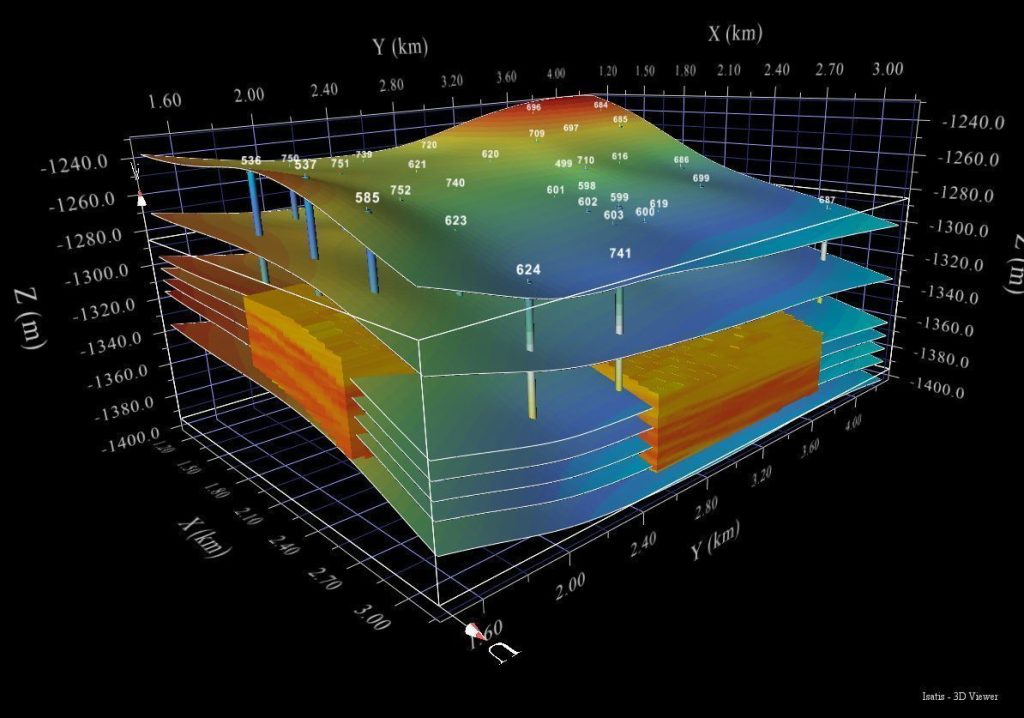
Static geological models represent the spatial distribution of reservoir properties such as lithology, porosity, permeability, and structural features. These models are constructed using seismic interpretation, well logs, and core data to provide a three-dimensional representation of the subsurface. The incorporation of geological realism through geostatistical methods ensures that heterogeneity and depositional patterns are preserved, which is critical for downstream simulation accuracy.
Fundamentals of Dynamic Reservoir Simulation
Dynamic reservoir simulation involves numerical modeling of fluid flow and pressure behavior within the reservoir over time. It integrates physical laws governing multiphase flow, thermodynamics, and rock-fluid interactions to predict production performance under various operational scenarios. Advanced simulation techniques, including compositional modeling and hybrid numerical schemes, enable accurate representation of complex reservoirs.
Key Differences Between Static and Dynamic Models
Static models describe the reservoir’s physical framework, while dynamic models simulate fluid movement and temporal behavior. The former is data-driven and spatially focused, whereas the latter is physics-based and time-dependent. The integration of both is essential to bridge the gap between geological understanding and production forecasting.
Importance of Model Integration in Capital Projects
Role in Field Development Planning and Investment Decisions
Integrated modeling serves as the backbone of field development planning, enabling operators to evaluate multiple development scenarios before committing capital. Studies on offshore gas assets demonstrate that simultaneous subsurface and surface modeling significantly improves decision-making efficiency and reduces development risks.
Impact on Reserve Estimation and Production Forecasting
Accurate integration enhances reserve estimation by aligning geological uncertainty with dynamic performance predictions. Integrated workflows have been shown to improve recovery forecasts in complex reservoirs, particularly in tight gas systems where heterogeneity plays a dominant role.
Reducing Uncertainty in Capital Allocation
Capital projects are inherently high-risk due to subsurface uncertainty. Integrated modeling reduces this uncertainty by incorporating probabilistic approaches and ensemble simulations, enabling more robust economic evaluations.
Core Components of Static Geological Models
Structural Framework and Fault Modeling
Structural modeling defines the reservoir geometry, including faults, folds, and stratigraphic boundaries. Accurate fault representation is critical as faults can act as flow barriers or conduits, significantly influencing reservoir performance.
Stratigraphic Architecture and Facies Distribution
Stratigraphic modeling captures depositional environments and facies distribution, which control reservoir heterogeneity. Geological realism is essential to ensure that simulation models reflect actual subsurface conditions (Linde et al., 2017).
Petrophysical Property Modeling and Upscaling
Petrophysical modeling assigns reservoir properties to the geological framework. Upscaling techniques are then applied to translate fine-scale properties into coarser simulation grids while preserving essential heterogeneity.
Key Elements of Dynamic Reservoir Simulation
Fluid Flow Modeling and Phase Behavior
Dynamic simulation models fluid flow behavior, including multiphase interactions and pressure distribution. Accurate representation of phase behavior is crucial for predicting reservoir performance under varying conditions.
History Matching and Model Calibration
History matching aligns simulation outputs with historical production data, ensuring model reliability. This iterative process is essential for validating model assumptions and improving predictive accuracy.
Forecasting Production and Recovery Scenarios
Simulation models are used to forecast production under different development strategies, enabling optimization of recovery and operational efficiency.
Workflow for Integrating Static and Dynamic Models
Data Preparation and Quality Control
Integration begins with rigorous data preparation and quality control. Inconsistent or poor-quality data can propagate errors throughout the modeling workflow.
Grid Construction and Property Upscaling Techniques
Grid construction involves translating geological models into simulation grids. Upscaling techniques ensure that key reservoir features are retained while maintaining computational efficiency.
Initialization and Model Consistency Checks
Initialization ensures that the model accurately represents reservoir conditions at the start of simulation. Consistency checks verify alignment between static and dynamic models.
Data Integration and Multidisciplinary Collaboration
Combining Geological, Geophysical, and Engineering Data
Effective integration requires the synthesis of diverse datasets, including seismic, well logs, and production data. Multidisciplinary collaboration is essential for achieving a coherent model.
Role of Reservoir Engineers and Geoscientists
Geoscientists provide geological insights, while reservoir engineers focus on flow dynamics and simulation. Their collaboration ensures that models are both geologically realistic and physically accurate.
Managing Data Uncertainty Across Disciplines
Uncertainty arises from data limitations and interpretation variability. Integrated workflows incorporate uncertainty quantification to improve decision-making.
Upscaling Techniques and Grid Optimization
Scale Transition from Fine Geological Models to Simulation Grids
Upscaling bridges the gap between detailed geological models and computationally feasible simulation grids. This process is critical for maintaining model accuracy.
Preserving Heterogeneity During Upscaling
Preserving heterogeneity ensures that key flow pathways and barriers are accurately represented in the simulation model.
Impact of Grid Resolution on Simulation Accuracy
Grid resolution directly affects simulation accuracy and computational cost. Optimal grid design balances detail with efficiency.
Model Calibration and Validation Strategies
History Matching Techniques and Best Practices
History matching remains a cornerstone of model validation. Advanced techniques incorporate automated algorithms and data assimilation methods to improve efficiency.
Sensitivity Analysis and Uncertainty Quantification
Sensitivity analysis identifies key parameters influencing model outcomes, while uncertainty quantification provides probabilistic forecasts.
Continuous Model Updating with Production Data
Continuous updating ensures that models remain relevant as new data becomes available, enabling adaptive reservoir management.
Challenges in Integrating Static and Dynamic Models
Data Inconsistencies and Model Mismatch
Differences in data resolution and interpretation can lead to mismatches between static and dynamic models, complicating integration.
Computational Limitations and Model Complexity
High-resolution models require significant computational resources. Advances in high-performance computing are addressing these challenges.
Handling Geological Uncertainty in Simulation
Geological uncertainty remains a major challenge. Ensemble modeling and stochastic approaches are increasingly used to address this issue.
Advanced Technologies in Model Integration
AI and Machine Learning in Reservoir Modeling
AI and machine learning enhance model integration by improving prediction accuracy and automating workflows. Hybrid approaches combining physics-based and data-driven methods are gaining traction.
Digital Twin Applications for Real-Time Simulation
Digital twins enable real-time monitoring and simulation, allowing operators to optimize production and respond to changing reservoir conditions.
Cloud-Based Reservoir Simulation Platforms
Cloud-based platforms facilitate large-scale simulations and collaborative workflows, improving efficiency and scalability.
Economic and Strategic Benefits for Capital Projects
Improving Investment Decision Accuracy
Integrated models provide reliable forecasts, enabling better investment decisions and reducing financial risk.
Optimizing Field Development and Recovery Strategies
Simulation-driven optimization enhances recovery strategies and operational efficiency.
Enhancing Risk Management and Project ROI
By reducing uncertainty and improving forecasting accuracy, integrated modeling enhances risk management and return on investment.
Common Mistakes in Model Integration
Poor Data Quality and Inadequate Validation
Inadequate data quality and validation can lead to unreliable models and poor decision-making.
Over-Simplification of Geological Complexity
Simplifying geological features can result in inaccurate simulation outcomes and suboptimal development strategies.
Misalignment Between Static and Dynamic Models
Failure to align models can lead to inconsistencies and reduced predictive accuracy.
Best Practices for Successful Integration
Iterative Modeling and Continuous Feedback Loops
Iterative workflows ensure continuous improvement and alignment between models.
Alignment Between Geological and Engineering Teams
Collaboration between teams is essential for successful integration.
Adoption of Industry Standards and Workflows
Standardized workflows improve consistency, reliability, and efficiency in model integration.
Future Trends in Reservoir Model Integration
Automation of Integrated Modeling Workflows
Automation is streamlining workflows and reducing manual effort in model integration.
Real-Time Data Assimilation and Adaptive Simulation
Real-time data assimilation enables adaptive simulation and improved decision-making.
Increasing Role of AI in Predictive Reservoir Modeling
AI is expected to play a central role in future reservoir modeling, enhancing predictive capabilities and efficiency.
Final Checklist for Integrated Reservoir Modeling in Capital Projects
Verification of Data Consistency and Quality
Ensure that all input data are accurate, consistent, and validated.
Validation of Simulation Outputs Against Field Data
Compare simulation results with actual field data to ensure reliability.
Alignment with Project Objectives and Economic Goals
Ensure that modeling outcomes align with project objectives and economic targets.
Frequently Asked Questions
What is the difference between static geological models and dynamic reservoir simulation?
Static models represent the spatial distribution of reservoir properties, while dynamic simulations model fluid flow and temporal behavior within the reservoir.
Why is integrating static and dynamic models important for capital projects?
Integration improves forecasting accuracy, reduces uncertainty, and supports informed investment decisions.
How does upscaling affect reservoir simulation accuracy?
Upscaling simplifies fine-scale geological details while preserving key features, balancing accuracy and computational efficiency.
What data is required to integrate geological and simulation models?
Key data include seismic surveys, well logs, core samples, and production history.
How do engineers ensure consistency between static and dynamic models?
Through data validation, model calibration, and iterative integration workflows.
What are the main challenges in reservoir model integration?
Challenges include data inconsistencies, computational limitations, and geological uncertainty.
How does history matching improve model reliability?
History matching aligns model predictions with actual production data, improving accuracy and confidence.
What role does AI play in integrated reservoir modeling?
AI enhances prediction accuracy, automates workflows, and supports uncertainty analysis.
How does model integration impact investment decisions in oil and gas projects?
It provides reliable forecasts and risk assessments, enabling better capital allocation decisions.
What are best practices for integrating reservoir models successfully?
Best practices include iterative workflows, multidisciplinary collaboration, and adherence to industry standards.
References
Chen, H., Liu, H., Shen, C., Xie, W., Liu, T., Zhang, J., Lu, J., Li, Z., & Peng, Y. (2024). Research on geological-engineering integration numerical simulation based on EUR maximization objective. Energies, 17(15), 3644. https://doi.org/10.3390/en17153644
Correia, M., et al. (2025). Integrated approach to improve numerical simulation of complex carbonate reservoirs using stochastic techniques. Chemical Engineering Communications. https://doi.org/10.1080/10916466.2023.2292779
Danmadami, A. (2024). A predictive model for marginal field development. Smart Science & Technology, 1(1), 1467. https://doi.org/10.1144/geoenergy2024-1467
Edimo Kingue, S. D., Akinmuda, O. B., Kuiekem, D., & Djitchouang, G. L. (2025). Assessing the production potential of Niger Delta reservoirs under uncertainty using numerical simulation tools. Petroleum Science and Technology, 1–20. https://doi.org/10.1080/10916466.2025.2594725
Gisolf, A., Dubost, F., Zuo, J., Williams, S., Kristoffersen, J., Achourov, V., Bisarah, A., & Mullins, O. (2009). Real-time integration of reservoir modeling and formation testing. https://doi.org/10.2118/121275-MS
Iqbal, S. M., Hu, D., Hussain, J., Ali, N., Hussain, W., Hussain, A., & Nyakilla, E. E. (2025). Integrated reservoir characterization and simulation approach to enhance production of tight sandstone gas reservoir, Sulige gas field, Ordos Basin, China. Physics and Chemistry of the Earth, Parts A/B/C, 138, Article 103846. https://doi.org/10.1016/j.pce.2024.103846
Jenkins, C., Pestman, P., Carragher, P., & Constable, R. (2024). Long-term risk assessment of subsurface carbon storage: Analogues, workflows and quantification. Geoenergy, 2(1), 12. https://doi.org/10.1144/geoenergy2024-014
Khalaf, M., Kim, H., Sun, A. Y., Van Essendelft, D., Shih, C. Y., Liu, G., & Siriwardane, H. (2025). High-Performance Reservoir Simulation with Wafer-Scale Engine for Large-Scale Carbon Storage. Energies, 18(22), 5874. https://doi.org/10.3390/en18225874
Khalili, Y., & Ahmadi, M. (2024). Reservoir modeling and simulation: Advancements, challenges, and future perspectives. Journal of Chemical and Petroleum Engineering, 57, 343–364. https://doi.org/10.22059/jchpe.2023.363392.1447
Linde, N., Renard, P., Mukerji, T., & Caers, J. (2017). Geological realism in hydrogeological and geophysical inverse modeling: A review. Advances in Water Resources.
Moortgat, J., & Firoozabadi, A. (2016). Mixed-hybrid and vertex-discontinuous-Galerkin finite element modeling of multiphase compositional flow on 3D unstructured grids. Computational Physics, 315, 476–500. https://doi.org/10.1016/j.jcp.2016.03.054.
Otmane, M., Imtiaz, S., Jaluta, A. M., & Aborig, A. (2025). Boosting reservoir prediction accuracy: A hybrid methodology combining traditional reservoir simulation and modern machine learning approaches. Energies, 18(3), 657. https://doi.org/10.3390/en18030657
Parmar, J., et al. (2023). An integrated reservoir modelling and simulation workflow for field development planning. EarthDoc Conference Proceedings. https://doi.org/10.3997/2214-4609.202310679
Solis, R., Rojas, S., Bernal, G., Saputelli, L., & Narayanan, K. (2004, October 24–27). Optimum offshore gas asset development planning with simultaneous subsurface and surface modeling and simulation [Paper presentation]. AAPG International Conference, Cancun, Mexico. https://www.searchanddiscovery.com/documents/abstracts/2004intl_cancun/extended/A91249.pdf
Tuczyński, T., & Stopa, J. (2023). Uncertainty quantification in reservoir simulation using modern data assimilation algorithm. Energies, 16(3), 1153. https://doi.org/10.3390/en16031153
Xu, Y., Sun, Z., Chen, W., Yu, B., Liu, J., Ren, Z., Wang, Y., Guo, C., Wu, R., & Jiang, Y. (2025). Integrating stochastic geological modeling and injection–production optimization in aquifer underground gas storage: A case study of the Qianjiang Basin. Processes, 13(6), 1728. https://doi.org/10.3390/pr13061728
Yu, X., Kang, Z., Li, Y., et al. (2025). Integration of geological model and numerical simulation technique to characterize remaining oil in fractured biogenic limestone reservoirs. Arabian Journal for Science and Engineering, 50, 5117–5133. https://doi.org/10.1007/s13369-024-09675-2
Zhang, T. (2008). Incorporating geological conceptual models into reservoir modeling using multiple-point geostatistics. Earth Science Frontiers, 15(1), 26–35. https://doi.org/10.1016/S1872-5791(08)60016-0