
Selecting the right simulator is a pivotal technical decision that influences the “bankability” of a Carbon Capture and Storage (CCS) project. While many tools exist, the industry often debates the merits of TOUGHREACT versus CMG-GEM. This guide explores how to choose between them based on your project’s scale and objectives.
Understanding Reactive Transport Modeling in Geological Carbon Storage
Role of Reactive Transport in CO₂ Storage Performance
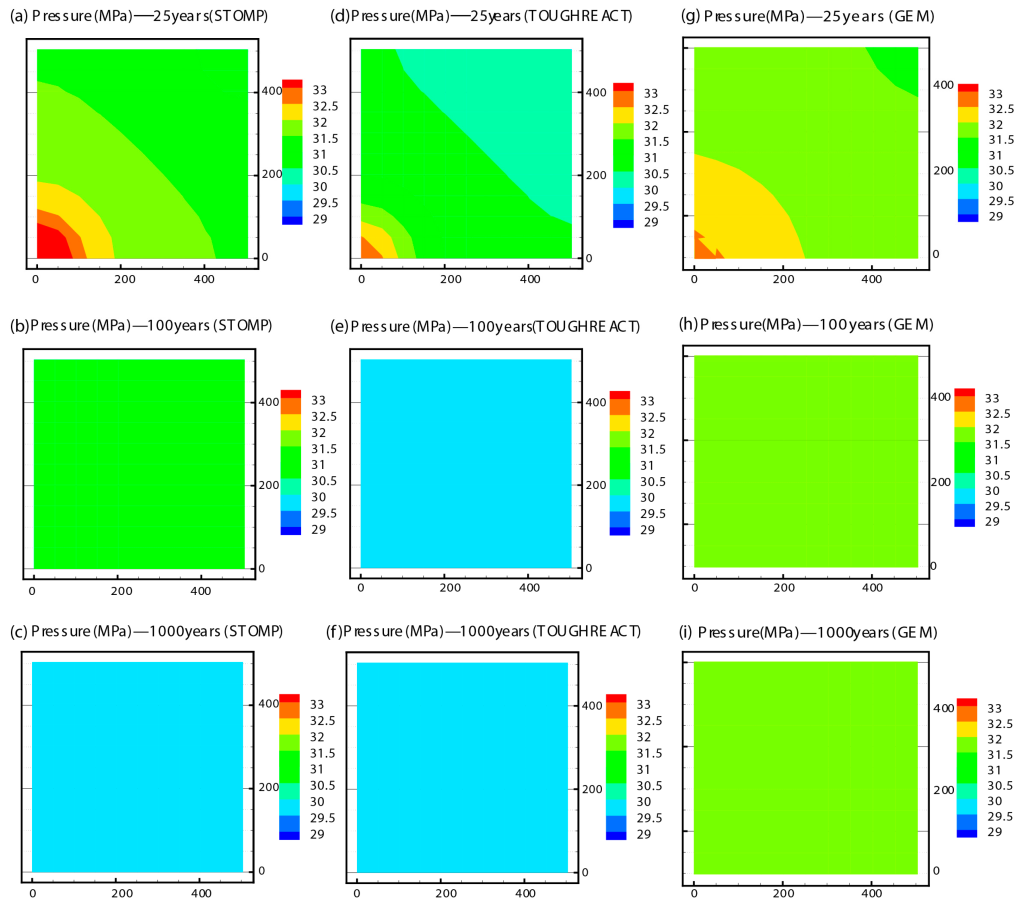
Reactive transport modeling describes the coupled processes of fluid flow, mass transport, and geochemical reactions that govern CO₂ behavior in subsurface formations. These processes directly influence plume migration, pressure evolution, dissolution into brine, and long-term trapping mechanisms. Comparative simulator studies show that while different tools can reproduce similar first-order plume behavior, their predictions can diverge in pressure response and geochemical evolution, underscoring the importance of model selection in CCS studies.
Coupling Multiphase Flow with Geochemical Reactions
CO₂ storage involves multiphase flow between supercritical CO₂ and formation brine, coupled with chemical reactions between CO₂, water, and rock minerals. Accurate modeling requires simulators capable of handling both compositional flow and geochemical kinetics. Benchmarking studies highlight that different simulators vary significantly in how tightly they couple these processes, affecting prediction accuracy.
Importance of Reactive Modeling for Long-Term Storage Integrity
Over long timescales, geochemical reactions such as mineral dissolution and precipitation can alter reservoir properties and enhance storage security through mineral trapping. These processes are critical for demonstrating long-term containment in CCS projects and are best captured using reactive transport models.
Overview of TOUGHREACT for CO₂ Storage Applications
Core Capabilities and Simulation Framework
TOUGHREACT is a reactive transport simulator developed at Lawrence Berkeley National Laboratory that extends the TOUGH2 framework to include detailed geochemical processes. It solves coupled equations for multiphase flow, heat transport, and chemical reactions in porous media.
Strengths in Geochemical Reaction Modeling
TOUGHREACT provides detailed treatment of aqueous speciation, mineral dissolution and precipitation, and kinetic reactions. This makes it particularly suitable for modeling CO₂–brine–rock interactions and long-term geochemical evolution, which are essential for understanding mineral trapping and reservoir alteration.
Typical Use Cases in Saline Aquifers and Mineralization Studies
TOUGHREACT is widely used in:
- Laboratory-scale and pilot-scale reactive transport studies
- Modeling mineral trapping in saline aquifers and basalt formations
- Investigating geochemical impacts on porosity and permeability
Overview of CMG-GEM for Carbon Storage Modeling
Core Capabilities and Compositional Reservoir Simulation
CMG-GEM is a compositional reservoir simulator designed for multiphase, multicomponent flow modeling in subsurface systems. It is widely used in petroleum engineering and has been adapted for CO₂ storage applications.
Strengths in Multiphase Flow and Field-Scale Simulation
GEM excels at modeling large-scale reservoir behavior, including phase behavior, pressure propagation, and plume migration. It is particularly effective for simulating injection operations and field-scale CO₂ storage scenarios.
Typical Use Cases in CO₂ Injection and Enhanced Recovery Systems
CMG-GEM is commonly applied in:
- Field-scale CO₂ injection modeling
- Enhanced oil recovery (EOR) operations
- Pressure management and plume migration studies
Comparative studies show GEM performs robustly in capturing reservoir-scale flow behavior, although with less detailed geochemical representation than specialized reactive transport simulators.
Key Differences Between TOUGHREACT and CMG-GEM
Numerical Methods and Simulation Approaches
TOUGHREACT uses a reactive transport framework focused on coupling flow with geochemistry, while GEM employs compositional reservoir simulation methods optimized for large-scale multiphase flow problems.
Treatment of Geochemical Reactions and Kinetics
TOUGHREACT provides detailed kinetic and equilibrium reaction modeling. In contrast, GEM includes limited geochemical functionality and is not designed for high-resolution reaction modeling.
Handling of Multiphase Flow and Phase Behavior
GEM is highly advanced in modeling multiphase compositional flow and phase behavior, making it suitable for operational-scale simulations. TOUGHREACT also models multiphase flow but prioritizes geochemical coupling over flow efficiency.
Scalability for Field-Scale vs Process-Scale Modeling
TOUGHREACT is typically applied at smaller scales due to computational demands, while GEM is designed for field-scale applications involving large grids and long simulation times.
When to Use TOUGHREACT in Carbon Storage Projects
Modeling CO₂–Brine–Rock Geochemical Interactions
TOUGHREACT should be used when detailed geochemical interactions are central to the study, particularly for analyzing reaction pathways and chemical evolution.
Evaluating Mineral Trapping and Long-Term Geochemical Evolution
For studies focused on mineral trapping and long-term geochemical stabilization, TOUGHREACT provides the necessary level of detail to simulate carbonate formation and mineral alteration processes.
Research Applications in Reactive Transport and Laboratory-Scale Systems
TOUGHREACT is best suited for:
- Academic research
- Laboratory-scale modeling
- Mechanistic studies of reactive transport processes
When to Use CMG-GEM in Carbon Storage Projects
Designing CO₂ Injection Strategies for Reservoirs
CMG-GEM is ideal for designing injection strategies, including well placement, injection rates, and pressure management in large reservoirs.
Field-Scale Simulation of CO₂ Plume Migration
GEM is preferred for simulating plume migration and pressure evolution at field scale, where computational efficiency is critical.
Coupling Reservoir Engineering with Operational Decision-Making
GEM integrates well with reservoir engineering workflows, making it suitable for operational planning and decision-making in CCS projects.
Integrating TOUGHREACT and CMG-GEM in CCS Workflows
Sequential Modeling Approaches for Reactive Transport
TOUGHREACT can be used to evaluate geochemical effects, while GEM handles large-scale flow simulation. This sequential approach leverages the strengths of both tools.
Data Transfer Between Geochemical and Reservoir Models
Outputs from TOUGHREACT, such as porosity and permeability changes due to reactions, can be incorporated into GEM models to improve realism.
Hybrid Workflows for Investment-Grade Feasibility Studies
Hybrid workflows combining both simulators are increasingly used in CCS feasibility studies to reduce uncertainty and improve confidence in predictions.
Limitations and Challenges of Each Modeling Approach
Computational Complexity and Runtime Considerations
TOUGHREACT simulations can be computationally intensive due to detailed reaction modeling. GEM is more efficient but sacrifices geochemical detail.
Data Requirements and Model Calibration Challenges
Both simulators require extensive datasets, including geological, petrophysical, and geochemical parameters. Calibration remains challenging due to subsurface uncertainty.
Uncertainty in Reaction Kinetics and Reservoir Properties
Uncertainty in reaction kinetics and reservoir heterogeneity can significantly impact model predictions, particularly in long-term simulations.
Software Selection Criteria for CCS Modeling Teams
Project Objectives and Modeling Scope
The choice of simulator depends on whether the focus is geochemical processes or reservoir-scale flow behavior.
Availability of Input Data and Geological Complexity
Data availability and geological complexity influence the level of detail required and the choice of modeling tool.
Required Accuracy vs Computational Efficiency
Trade-offs between accuracy and efficiency must be considered when selecting a simulator.
Integration with Existing Reservoir Engineering Workflows
CMG-GEM is often preferred in industry due to compatibility with established workflows.
Role of Reactive Transport Modeling in Investment-Grade CCS Studies
Supporting Storage Security and Risk Assessment
Reactive transport models help evaluate leakage risks, pressure buildup, and geochemical stability.
Enhancing Confidence in Long-Term CO₂ Containment
Detailed modeling improves confidence in long-term containment by capturing key trapping mechanisms.
Contribution to Regulatory and Permitting Submissions
Regulatory frameworks require modeling evidence to demonstrate storage safety and environmental protection.
Best Practices for Choosing the Right Reactive Transport Simulator
Aligning Software Choice with Project Stage
Early-stage studies may prioritize TOUGHREACT, while later-stage feasibility studies rely more on GEM for field-scale modeling.
Combining Tools for Complementary Strengths
Using both tools provides a more comprehensive understanding of storage systems.
Validating Models with Experimental and Field Data
Model validation using laboratory and field data is essential for reliable predictions.
Frequently Asked Questions
What is the main difference between TOUGHREACT and CMG-GEM?
TOUGHREACT focuses on detailed geochemical modeling, while CMG-GEM is optimized for large-scale multiphase reservoir simulation.
When should TOUGHREACT be used instead of CMG-GEM in carbon storage modeling?
TOUGHREACT should be used when detailed geochemical interactions and mineral reactions are central to the study.
Can CMG-GEM simulate geochemical reactions in CO₂ storage projects?
CMG-GEM includes limited geochemical functionality but is not as detailed as TOUGHREACT for reaction modeling.
Is TOUGHREACT suitable for field-scale carbon storage simulations?
It can be applied, but is generally more suited to smaller-scale studies due to computational demands.
Which software is better for modeling mineral trapping in saline aquifers?
TOUGHREACT is better suited due to its detailed treatment of geochemical reactions.
How do TOUGHREACT and CMG-GEM handle multiphase flow differently?
CMG-GEM is more advanced in compositional multiphase flow, while TOUGHREACT emphasizes geochemical coupling.
Can TOUGHREACT and CMG-GEM be used together in CCS workflows?
Yes, hybrid workflows combining both tools are increasingly used.
What data is required to run reactive transport simulations in carbon storage?
Geological models, reservoir properties, fluid properties, and geochemical parameters are required.
Which simulator is preferred for investment-grade CCS feasibility studies?
CMG-GEM is typically used for field-scale studies, while TOUGHREACT supports detailed geochemical analysis.
What are the limitations of reactive transport modeling in CO₂ sequestration?
Limitations include computational cost, uncertainty in reaction kinetics, and challenges in representing subsurface heterogeneity.
References
Addassi, M., Omar, A., Ghorayeb, K., & Hoteit, H. (2021). Comparison of various reactive transport simulators for geological carbon sequestration. International Journal of Greenhouse Gas Control, 110, 103419. https://doi.org/10.1016/j.ijggc.2021.103419
Al Mulhim, A. K., Delshad, M., & Sepehrnoori, K. (2025). CO2 sequestration in a carbonate saline aquifer: An investigation into the roles of natural fractures and well placement. Energies, 18(2), 242. https://doi.org/10.3390/en18020242
Askarova, A., et al. (2023). An overview of geological CO2 sequestration in oil and gas reservoirs. Energies, 16(6), 2821. https://doi.org/10.3390/en16062821
Helle, K., Tarigan, S., Røneid, S., & Sriskandarajah, T. (2011). DNV Recommended Practice: Design and operation of CO2 pipelines. Energy Procedia, 4, 3032–3039. https://doi.org/10.1016/j.egypro.2011.02.214
Khan, M. N., Siddiqui, S., & Thakur, G. C. (2024). Recent advances in geochemical and mineralogical studies on CO2–brine–rock interaction for CO2 sequestration: Laboratory and simulation studies. Energies, 17(13), 3346. https://doi.org/10.3390/en17133346
Kutsienyo, E. J., Appold, M. S., White, M. D., & Ampomah, W. (2021). Numerical modeling of CO2 sequestration within a five-spot well pattern in the Morrow B Sandstone of the Farnsworth Hydrocarbon Field: Comparison of the TOUGHREACT, STOMP-EOR, and GEM simulators. Energies, 14(17), 5337. https://doi.org/10.3390/en14175337
Society of Petroleum Engineers (SPE). (2025). Results from the 11th SPE Comparative Solution Project (SPE11): Benchmarking simulation tools for geological CO2 storage. International Journal of Greenhouse Gas Control, 134, 104519. https://doi.org/10.1016/j.ijggc.2025.104519
Xu, T., Sonnenthal, E., Spycher, N., & Pruess, K. (2011). TOUGHREACT User’s Guide: A simulation program for non-isothermal multiphase reactive geochemical transport in variably saturated geologic media (LBNL-4026E). Lawrence Berkeley National Laboratory. https://tough.lbl.gov/software/toughreact/